
Carbon Capture
Carbon capture is becoming a critical pillar of the green transition, enabling the production of sustainable fuels and lowering emissions in hard-toabate sectors through CCUS. For carbon capture we distinguish between low- and high-concentration CO₂ sources.
What we do
For low concentration flue gas sources, we develop and deliver next-generation post-combustion Carbon Capture solutions, based on advanced amine technologies for efficient capture of CO₂
Our post-combustion Carbon Capture solutions allow customers to capture CO₂ from:
- Fossil fuel-based flue gases
- Biofuel based flue gases
- Industrial process such as cement and lime kilns
- Other low concentration by-product streams
For high concentration CO₂ sources, we develop customized purification and liquefaction plants, applying different purification steps, such as scrubbing, adsorption, catalytic oxidation and cryogenic distillation and separation.
Our CO2 purification and liquefaction solutions allow customers to capture CO₂ from:
- Hydrogen production
- Fertiliser production
- Biogas or biofuel production
- Ethylene Oxide production
- Other high containing by-product streams
Combining our post-combustion Carbon Capture solutions with our CO₂ purification and liquefaction solutions we deliver fully integrated end-to-end solutions for full-scale CCUS.

Our CCS / CCUS solutions in a nutshell
Low CO2 concentration sources
10% CO₂ content
Range: 50 – 500.000 Nm3/h fluegas
Heat consumption: 1,0 – 1,1 MW/ton CO2
Power Consumption: 225 – 300 kW/ton CO2
Water: 0-500 L/ton CO2
Product quality: Industrial-, food-, PtX-, and EIGA Doc 70 grade
Low-concentration sources include power plant stack gas, waste incineration, engines and turbines, and similar types of waste streams, with a CO2 concentration of approx. 10%.
High CO₂ concentration sources
>95% CO₂
Range: 25 – 1000 tons/day
Heat consumption: None
Power consumption: 165 – 225 kW/tons
Water consumption: 0 – 500 L/ton CO₂
Product quality: Industrial-, food-, PtX- and EIGA Doc 70 grade
High concentration sources include Biogas, fermentation, and certain chemical and petrochemical waste streams. CO₂ sources are generally considered as being high-concentrations when the CO₂ content exceeds 95%.
Carbon capture
For low-concentration sources like power plants, waste incinerators, and cement plants, we offer amine-based post-combustion CO₂ capturing technology, to separate the CO₂ from the flue gases. The separated CO₂ can then be purified and liquefied according to the actual requirements using our CO₂ purification and liquefaction solutions.
Other known industrial CO₂ emitters like fertilizer, ethylene oxide, and fermentation are also suitable sources for CCUS, but considered high-concentration sources. These can normally be purified and liquefied directly using our CO₂ purification and liquefaction solutions.
Recently biogenic CO₂ from known sources like biogas, distilleries, and other organic matters, fermented sources has also become interesting for CCUS. These are also easily purified and liquified using our CO₂ purification and liquefaction solutions.
Our extensive experience working with different sources, technologies, and output has built a robust know-how in our team which makes us able to design and deliver the right technologies for the required needs and applications.
Customer testimonials

Press releases
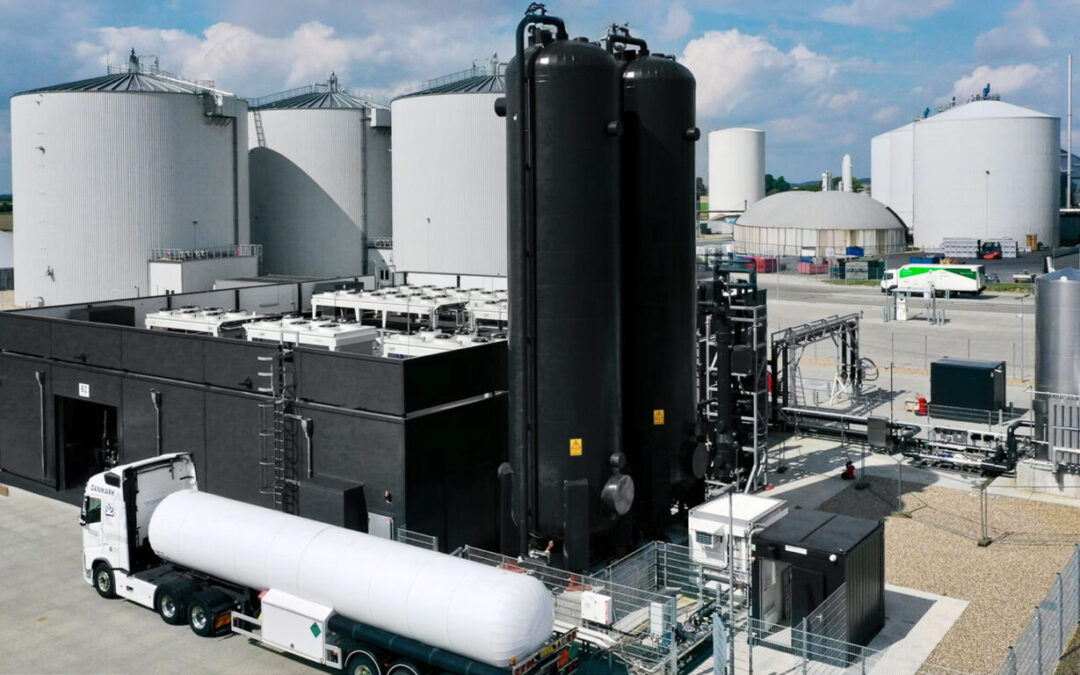
Not all CO₂ is created equal
Food-grade CO₂ CO₂ plays a vital role in the food and beverage industry, where purity, safety and sensory quality are essential. Two internationally recognized standards define food-grade CO₂: EIGA and ISBT. To qualify as a food-grade, CO₂ must...
It starts with a great dialogue
Consulting is the first step to serving our clients. Helping drive sales growth is our priority and our specialty. Our team has a large arsenal of advertising services to help you design high-impact campaigns that fit your business goals while providing stellar service and creative solutions.
Niels Grave
Sales manager
Experienced in project sales, targeting individual customer requirements globally.
B.Sc. Mechanical engineering